For many people, budgeting feels complicated and restrictive. The word itself often brings to mind spreadsheets, strict spending rules, and constant financial tracking. Because of this perception, many individuals avoid creating a budget altogether.
However, budgeting does not need to be complex to be effective. In fact, the most successful budgeting systems are often the simplest ones.
A clear and flexible structure can help people manage their money without feeling overwhelmed. By understanding where income goes each month and making a few intentional adjustments, anyone can build a stronger financial foundation.
One of the most practical approaches is a budgeting method that balances spending, saving, and financial stability without requiring constant calculations.
Why Many Budgets Fail
Traditional budgeting systems often fail because they are too rigid.
Some budgeting methods require people to track every single expense in detail. While this can provide valuable insights, it can also feel exhausting and difficult to maintain over time.
When a budgeting system becomes stressful, people are more likely to abandon it.
A sustainable financial plan should be simple enough to follow consistently while still providing structure and awareness.
The goal of budgeting is not perfection—it is clarity.
The 50/30/20 Budgeting Framework
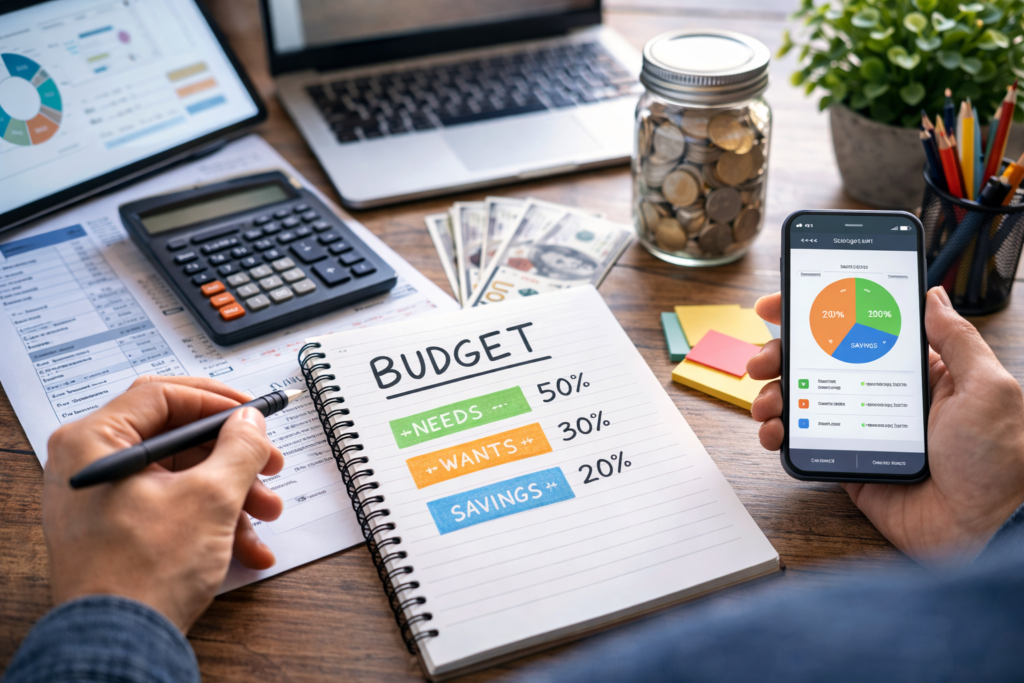
One of the most widely recommended budgeting methods is the 50/30/20 rule.
This approach divides monthly income into three main categories:
50% – Essential Needs
This portion covers necessary living expenses such as:
- housing or rent
- utilities
- groceries
- transportation
- insurance
- basic bills
These are expenses required to maintain daily life.
30% – Personal Spending
This category includes discretionary spending, such as:
- entertainment
- dining out
- hobbies
- travel
- subscriptions
- lifestyle purchases
This portion ensures that a budget still allows room for enjoyment.
20% – Savings and Financial Goals
The final portion is dedicated to long-term financial security.
This may include:
- emergency savings
- retirement investments
- debt repayment
- long-term financial goals
By consistently allocating money toward this category, individuals gradually build financial stability.
Why Simplicity Works
The strength of the 50/30/20 system lies in its simplicity.
Instead of tracking dozens of categories, the method focuses on just three main areas. This makes it easier to understand how money flows each month.
Simplicity also encourages consistency.
When a budgeting system is easy to follow, people are more likely to maintain it over time. And consistency is what ultimately leads to financial progress.
Even small monthly savings can grow significantly over time when maintained consistently.
Adjusting the Framework to Fit Your Life
While the 50/30/20 rule provides a helpful guideline, it does not need to be followed perfectly.
In some cities with high living costs, essential expenses may exceed 50% of income. In other cases, individuals may choose to save more than 20% if they are pursuing aggressive financial goals.
The key idea is balance.
People should aim to maintain reasonable spending while ensuring that savings remain a regular priority.
The percentages can be adjusted slightly depending on personal circumstances.
Tracking Spending Without Stress
Budgeting becomes easier when spending habits are visible.
Many people track expenses using simple tools such as:
- budgeting apps
- bank account summaries
- monthly spending reviews
- simple spreadsheets
Tracking does not need to happen daily. Even reviewing spending once per week or once per month can provide valuable insights.
The goal is awareness rather than strict control.
Building an Emergency Fund
One of the most important financial goals is building an emergency fund.
Unexpected expenses—such as medical bills, car repairs, or temporary income loss—can create financial stress if no savings are available.
An emergency fund acts as a financial safety net.
Many experts recommend saving enough to cover three to six months of essential expenses. While this may take time to build, starting with small contributions can gradually create meaningful protection.
Automating Your Financial System
Automation is one of the most effective ways to maintain financial discipline.
Setting up automatic transfers to savings accounts ensures that a portion of income is saved before it can be spent.
Similarly, automatic bill payments reduce the risk of missed payments or late fees.
When financial systems run automatically, individuals no longer need to rely on constant decision-making to maintain good habits.
Long-Term Financial Confidence
Budgeting should not feel like a restriction—it should create confidence.
When people understand how their money is distributed, financial decisions become less stressful. Clear systems provide stability and make long-term goals easier to achieve.
Over time, consistent budgeting allows individuals to build savings, reduce debt, and create greater financial security.
The most important step is simply starting.
Even a simple budgeting framework can transform how money is managed and help create a more stable financial future.