For many people, the word “budget” immediately brings to mind strict rules, spreadsheets, and the feeling of constantly restricting spending. Because of this perception, budgeting often feels overwhelming or discouraging before it even begins.
In reality, a good personal budget is not about limiting every purchase. Instead, it is a system that helps you understand where your money goes and allows you to make intentional financial decisions.
A simple and practical budget can reduce financial stress, improve savings habits, and provide clarity about your financial situation. The key is creating a system that is easy to maintain over time.
When budgeting becomes too complex, people tend to abandon it. A sustainable budget should be flexible, realistic, and aligned with your everyday lifestyle.
Understanding Your Monthly Income
The first step in building a functional budget is understanding exactly how much money you earn each month.
This may seem obvious, but many people rely on rough estimates rather than precise numbers. When income varies from month to month, it becomes even more important to calculate an average based on recent earnings.
Your budget should always begin with your net income, which is the amount you receive after taxes and deductions.
Once you know your real monthly income, it becomes easier to determine how much can realistically be allocated to expenses, savings, and long-term financial goals.
Identifying Essential Expenses
After determining your income, the next step is identifying your essential expenses.
These are the costs required to maintain your basic lifestyle. Common examples include:
- housing or rent
- groceries
- utilities
- transportation
- insurance
- basic healthcare costs
Listing these expenses helps establish the foundation of your budget. These obligations typically represent the largest portion of monthly spending, so understanding them clearly is essential.
If essential expenses already consume most of your income, adjustments may be necessary to create financial breathing room.
Tracking Everyday Spending
Many financial challenges arise from everyday spending that goes unnoticed.
Small purchases such as delivery meals, subscription services, or impulse shopping may seem insignificant individually. However, when combined over an entire month, they can represent a large portion of total spending.
Tracking expenses allows you to see where money actually goes.
This does not require complicated tools. A basic note-taking app, budgeting application, or simple spreadsheet can provide enough visibility to recognize spending patterns.
The goal is not to judge every purchase but to gain awareness of how spending habits align with financial priorities.
Using the 50/30/20 Budgeting Method
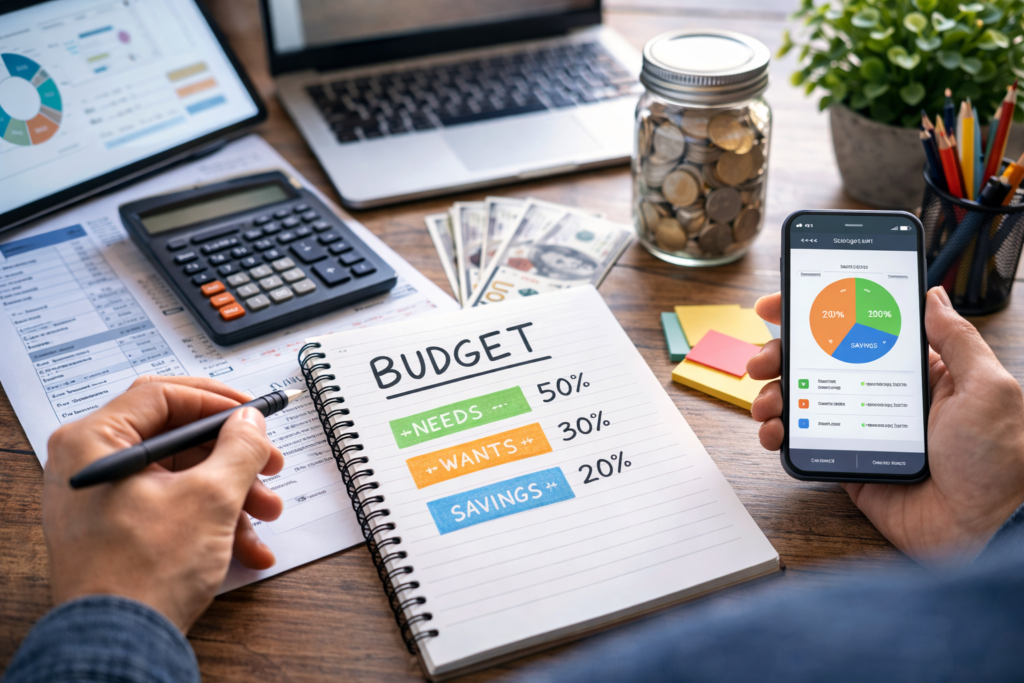
One popular and simple budgeting framework is the 50/30/20 rule.
This method divides income into three main categories:
50% for needs
Essential expenses such as housing, groceries, utilities, and transportation.
30% for wants
Nonessential spending such as dining out, entertainment, hobbies, and personal purchases.
20% for savings and financial goals
Savings, investments, debt repayment, or emergency funds.
This approach provides structure without requiring detailed tracking of every single expense.
While the percentages may vary depending on individual circumstances, the framework offers a useful starting point for balancing spending and saving.
Building an Emergency Fund
A reliable budget should always include some form of savings.
Unexpected expenses can appear at any time. Without financial preparation, these events may force people to rely on credit cards or loans.
An emergency fund provides protection against these situations.
Many financial experts recommend building a fund that covers three to six months of essential expenses. However, starting with smaller goals can make the process feel more manageable.
Even saving a modest amount each month can gradually build a financial safety net.
Automating Savings and Payments
Automation can make budgeting significantly easier.
By setting up automatic transfers to savings accounts, individuals ensure that a portion of their income is saved before it can be spent elsewhere.
Automatic bill payments also reduce the risk of missed deadlines or late fees.
When financial systems operate automatically, fewer daily decisions are required, which helps maintain consistency over time.
Reviewing Your Budget Regularly
A budget should not remain static forever.
Life circumstances change. Income may increase, expenses may shift, and financial priorities may evolve.
Reviewing your budget regularly allows you to adapt your plan to current conditions.
A monthly review can help identify areas where spending has increased or where additional savings opportunities exist.
These small adjustments ensure that your budget continues to support your long-term financial goals.
Creating a Budget That Fits Your Life
The most effective budget is one that fits naturally into your daily routine.
Rather than aiming for perfection, focus on building a system that you can maintain consistently.
Some people prefer detailed tracking, while others prefer simple percentage-based budgeting methods. Both approaches can work as long as they help you remain aware of your financial situation.
Over time, budgeting becomes less about restrictions and more about control.
By understanding your income, managing expenses, and building savings habits, you create a financial structure that supports long-term stability and peace of mind.