Managing money well is rarely about dramatic changes or sudden windfalls. More often, financial stability grows from small decisions repeated consistently over time. The habits people build around spending, saving, and planning often have a greater impact on their financial future than any single investment or paycheck.
Many individuals assume that improving their finances requires earning significantly more money. While income certainly matters, habits often play an even bigger role. Two people earning the same salary can end up in completely different financial situations depending on how they manage their money.
Developing a few smart money habits can gradually transform the way you approach finances, reduce stress, and create a stronger sense of control over your financial future.
Understanding Where Your Money Actually Goes
One of the most powerful financial habits is simply becoming aware of spending patterns. Many people underestimate how much they spend in small daily transactions such as coffee, subscriptions, convenience purchases, or online shopping.
Tracking expenses for even a few weeks can reveal patterns that were previously invisible. Once you see where your money is going, it becomes much easier to make intentional decisions about how it should be used.
This does not mean eliminating every enjoyable expense. Instead, the goal is to align spending with what genuinely matters to you.
For example, someone might discover they are spending large amounts on impulse purchases while neglecting savings or long-term goals. Small adjustments in these areas can free up surprising amounts of money over time.
Building the Habit of Paying Yourself First
One of the most widely recommended financial strategies is the principle of “paying yourself first.” This means setting aside money for savings before spending on anything else.
Instead of saving whatever remains at the end of the month, people who follow this approach treat savings as a fixed expense.
This can be implemented in simple ways, such as automatic transfers to a savings account whenever a paycheck arrives. Automation removes the need for constant discipline because the decision is made once and then repeated automatically.
Over time, this habit builds a financial cushion that can support emergency expenses, investments, or major life goals.
Avoiding Lifestyle Inflation
As income increases, many people gradually increase their spending as well. This phenomenon is known as lifestyle inflation.
While it is natural to improve your lifestyle as your earnings grow, unchecked lifestyle inflation can prevent long-term financial progress. Raises and bonuses disappear into higher expenses rather than contributing to savings or investments.
A useful strategy is to divide any income increase into multiple purposes. For example, someone might allocate part of a raise toward improving their lifestyle while directing another portion toward savings or investments.
This balanced approach allows you to enjoy financial progress while still strengthening your long-term financial position.
Creating a Simple and Flexible Budget
Budgets often have a reputation for being restrictive or complicated. In reality, a good budget is simply a plan that helps money flow toward your priorities.
The most effective budgets are simple enough to maintain consistently.
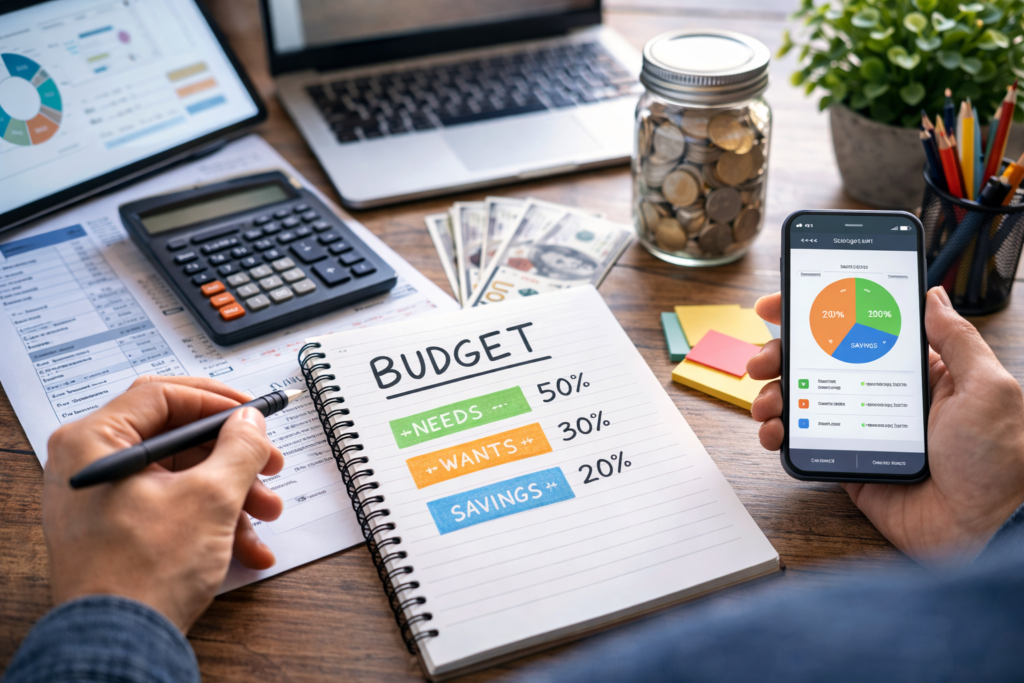
A common approach divides income into broad categories such as essential expenses, savings, and discretionary spending. Instead of tracking every small purchase in detail, this system focuses on maintaining healthy proportions between categories.
Flexibility is also important. A budget should adapt to changes in life circumstances rather than becoming a rigid set of rules.
When used correctly, budgeting does not limit freedom. It actually increases financial confidence because you know your essential needs and long-term goals are being supported.
The Power of an Emergency Fund
Unexpected expenses are inevitable. Medical bills, car repairs, home maintenance, or sudden changes in employment can occur without warning.
An emergency fund acts as a financial buffer that protects against these surprises.
Without savings, unexpected costs often lead to debt, which can create long-term financial stress. With an emergency fund, the same events become manageable disruptions rather than financial crises.
Most financial experts recommend gradually building savings that cover several months of essential living expenses. This goal may seem large at first, but consistent small contributions can build a meaningful safety net over time.
Making Saving Easier Through Automation
One of the most effective ways to improve financial habits is to remove friction from the saving process.
Automation allows people to build savings without relying entirely on willpower.
Automatic transfers, investment contributions, and recurring savings plans ensure that progress continues quietly in the background. Instead of making the same financial decision every month, the system works automatically.
This approach also reduces the temptation to spend money that was intended for long-term goals.
Over months and years, automated savings systems can produce surprisingly strong financial results.
Developing a Long-Term Financial Perspective
Financial success rarely happens overnight. Instead, it is built gradually through consistent decisions and disciplined habits.
People who adopt a long-term mindset often find it easier to resist short-term impulses that undermine financial stability. Instead of focusing on immediate gratification, they prioritize security, flexibility, and future opportunities.
This perspective also reduces anxiety around money. When progress is measured over years rather than weeks, small setbacks become less discouraging.
The combination of awareness, discipline, and patience forms the foundation of strong financial habits.
Over time, these habits can transform not only how you manage money, but also how you experience financial freedom and stability in everyday life.