Video games have evolved dramatically over the past few decades. What began as simple pixel-based experiences has transformed into immersive worlds filled with realistic environments, complex storytelling, and interactive gameplay systems.
One of the most powerful forces behind this evolution is artificial intelligence. AI has been used in games for years, often controlling non-player characters (NPCs) or adjusting difficulty levels. However, modern AI technologies are pushing gaming into an entirely new era.
Today, artificial intelligence is helping developers create more dynamic worlds, smarter characters, and more personalized experiences for players. As these technologies continue to advance, AI may fundamentally reshape how games are designed, played, and experienced.
Smarter Non-Player Characters (NPCs)
One of the earliest uses of AI in gaming was controlling NPC behavior.
In many classic games, non-player characters followed simple patterns or scripts. Enemies would patrol specific routes, attack when the player entered a certain area, or repeat predictable behaviors.
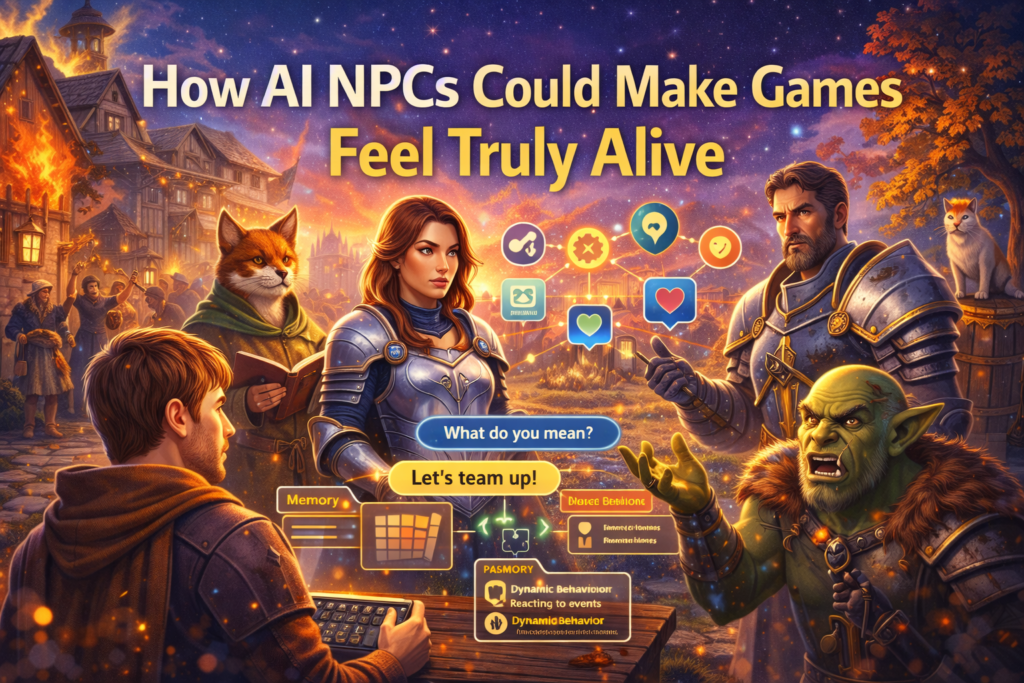
Modern AI systems allow NPCs to behave more intelligently and react to player actions in more realistic ways.
For example, AI-driven characters can now:
- adapt to different player strategies
- coordinate with other characters in combat
- respond to environmental changes
- remember previous interactions with players
These improvements make game worlds feel more alive and less predictable.
Procedural Game Worlds
Artificial intelligence is also helping developers create larger and more complex game environments.
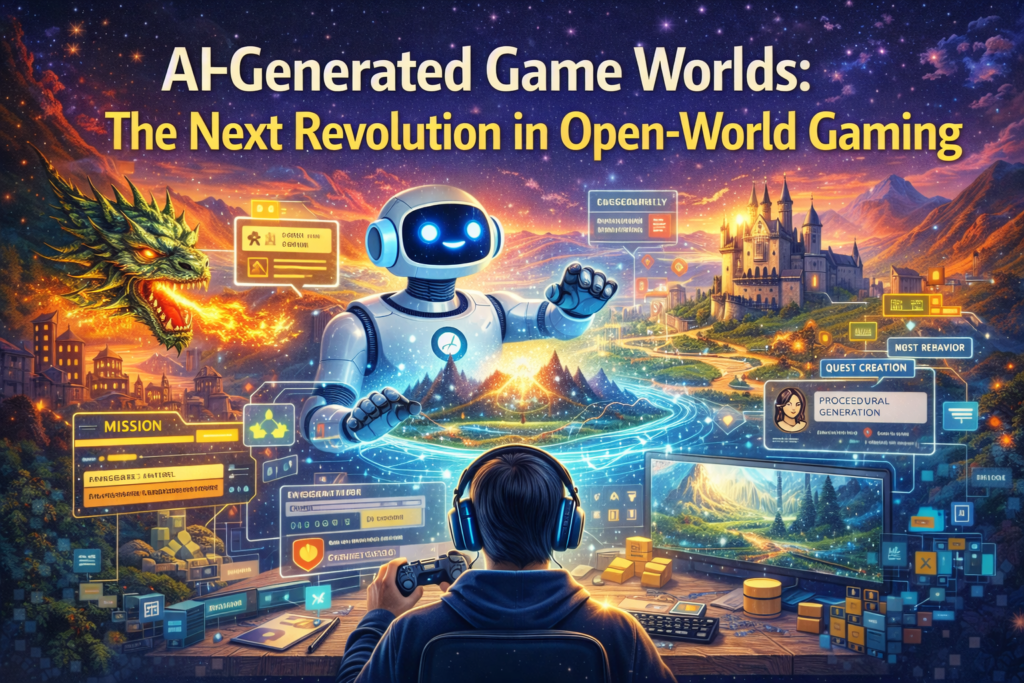
Procedural generation allows AI algorithms to build worlds dynamically rather than requiring developers to design every detail manually.
Some games already use this technique to generate landscapes, cities, or entire planets.
This approach allows developers to create massive worlds while reducing development time. It also increases replay value because each playthrough can produce slightly different environments.
As AI tools improve, procedural generation may become even more sophisticated, enabling endless exploration within game worlds.
Adaptive Difficulty Systems
AI can also analyze player behavior and adjust game difficulty automatically.
In traditional games, difficulty levels are often fixed: easy, normal, or hard. However, these settings may not perfectly match every player’s skill level.
AI systems can monitor how players perform and adjust gameplay accordingly.
For example, the game might:
- increase enemy difficulty for experienced players
- offer subtle assistance to struggling players
- adjust puzzle complexity dynamically
This adaptive design helps create a more balanced experience that remains challenging without becoming frustrating.
AI-Assisted Game Development
Artificial intelligence is not only affecting gameplay—it is also changing how games are created.
Developers are beginning to use AI tools to assist with tasks such as:
- generating concept art
- designing environments
- writing dialogue or story elements
- testing gameplay systems
AI-assisted development can accelerate certain creative processes and help smaller studios build complex games with fewer resources.
Rather than replacing human designers, AI tools often function as creative assistants that support the development process.
Personalized Player Experiences
Another exciting possibility is personalized gameplay.
AI systems can analyze how players interact with a game and adjust elements of the experience accordingly.
For example, future games may be able to:
- modify story paths based on player decisions
- adjust gameplay styles to match preferences
- generate unique missions or quests
- tailor in-game challenges to individual play styles
This level of personalization could make games feel more immersive and unique for each player.
AI-Generated Dialogue and Storytelling
Storytelling is an essential part of many modern games.
Traditionally, dialogue and narrative paths must be written manually by writers and designers. However, AI systems are beginning to assist with generating dialogue options and branching storylines.
In the future, AI-powered characters may be able to respond to players in more dynamic ways rather than relying solely on prewritten dialogue trees.
This could allow players to interact with characters in ways that feel more natural and less scripted.
Improving Game Testing
Testing games is one of the most time-consuming parts of development.
Before a game is released, developers must identify bugs, balance gameplay systems, and ensure that players cannot exploit unintended mechanics.
AI testing tools can simulate thousands of gameplay sessions rapidly, helping developers detect problems much faster.
These systems can analyze game mechanics, identify potential bugs, and test different gameplay scenarios automatically.
This allows development teams to focus more on improving the overall player experience.
Ethical Questions and Challenges
While AI offers many exciting possibilities for gaming, it also introduces new challenges.
Developers must consider questions such as:
- how much control AI should have over gameplay systems
- how AI-generated content affects creative ownership
- whether adaptive systems might create unfair advantages
Balancing innovation with fairness and creativity will be important as AI becomes more integrated into gaming.
The Next Generation of Gaming Experiences
Artificial intelligence is already shaping the next generation of video games.
As technology improves, AI may enable game worlds that feel more responsive, characters that behave more realistically, and stories that adapt dynamically to each player’s choices.
Rather than simply following predefined scripts, future games may evolve in real time based on player behavior.
For players, this could lead to richer, more immersive experiences. For developers, AI may unlock entirely new possibilities for game design.
The future of gaming will likely combine human creativity with artificial intelligence to create interactive worlds that are more dynamic than ever before.