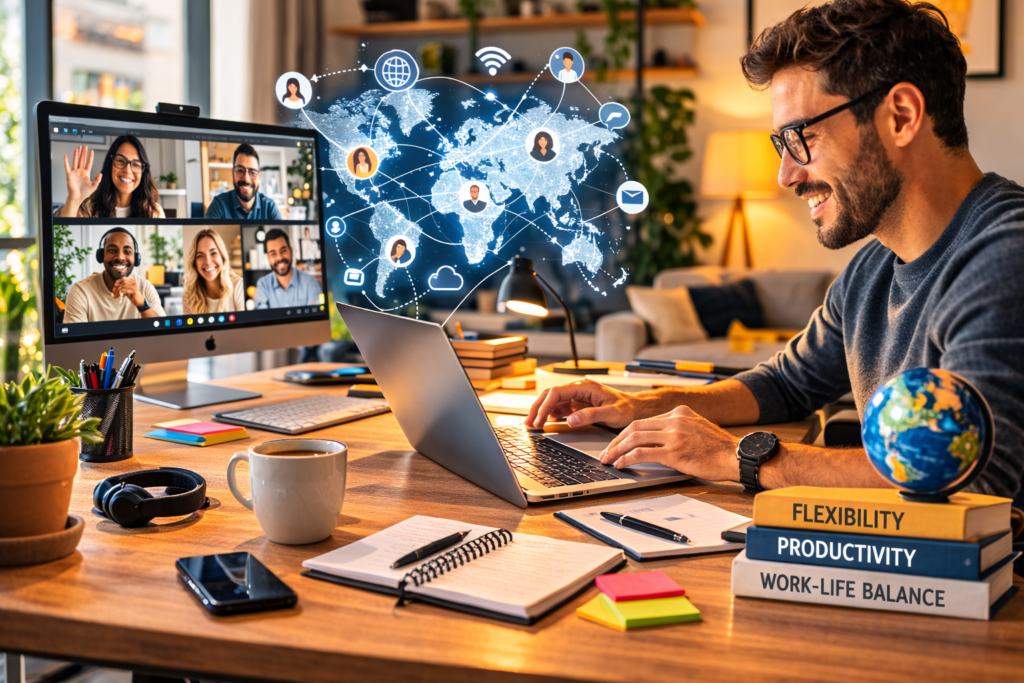
Over the past decade, the way people work has undergone a major transformation. Advances in technology, faster internet connections, and cloud-based collaboration tools have made it possible for millions of professionals to work from anywhere. What once seemed like a rare privilege has now become a common part of modern professional life.
Remote work is no longer limited to freelancers or technology companies. Organizations across many industries have adopted flexible work models, allowing employees to contribute from home offices, coworking spaces, or even different countries.
This shift is not simply a temporary trend. It is reshaping how careers are built, how companies hire talent, and how professionals think about work-life balance.
The Rise of Distributed Teams
One of the biggest drivers of remote work is the rise of distributed teams. Instead of hiring employees who live near a physical office, companies can now recruit talent from anywhere in the world.
This approach allows organizations to access a much larger talent pool. Skilled professionals are no longer limited by geography, which benefits both companies and workers.
For businesses, it means finding the best person for the role rather than the closest one. For professionals, it opens opportunities to work with global organizations without relocating.
Distributed teams also bring diverse perspectives and experiences, which can strengthen collaboration and innovation.
Greater Flexibility for Professionals
Flexibility is one of the most appealing aspects of remote work. Many professionals now have more control over how they structure their workdays.
Instead of commuting long distances or adhering strictly to traditional office hours, remote workers can often design schedules that better fit their personal routines.
This flexibility can improve work-life balance, reduce stress, and allow individuals to be more productive during their most focused hours.
For example, some people prefer working early in the morning, while others perform better later in the day. Remote work allows individuals to adapt their schedules to match their natural productivity patterns.
The Growth of Global Opportunities
Remote work has also expanded access to international career opportunities.
Professionals are increasingly able to collaborate with companies located in different countries without needing to relocate. This has created a more global job market where skills and expertise matter more than location.
For many individuals, this means access to better career options, higher salaries, or more interesting projects.
At the same time, companies benefit from diverse teams that bring varied perspectives and problem-solving approaches.
Changes in Workplace Culture
The shift toward remote work has also required organizations to rethink workplace culture.
Traditional office environments relied heavily on in-person interactions, spontaneous conversations, and physical meetings. Remote work, however, requires more intentional communication.
Companies have adopted digital collaboration tools, video meetings, and shared online workspaces to maintain team coordination.
Successful remote teams often focus on clear communication, trust, and outcome-based performance rather than monitoring hours spent in the office.
This cultural shift encourages greater autonomy and accountability among team members.
New Skills for the Remote Era
Working remotely requires a slightly different set of professional skills.
Self-discipline becomes especially important when working outside a traditional office environment. Without direct supervision, individuals must manage their own schedules and responsibilities.
Communication skills are also critical. Clear written communication helps teams collaborate effectively across time zones and digital platforms.
Other valuable remote work skills include:
- Time management
- Digital collaboration
- Problem-solving
- Independent decision-making
Developing these abilities helps professionals thrive in remote or hybrid environments.
The Impact on Cities and Workspaces
As remote work becomes more common, its effects extend beyond individual careers.
Cities that once depended heavily on office workers are experiencing changes in transportation patterns, real estate demand, and urban planning.
At the same time, new types of workspaces are emerging. Coworking spaces have grown in popularity, providing flexible environments where remote professionals can work, network, and collaborate.
These spaces offer a balance between the independence of remote work and the social interaction of traditional offices.
Maintaining Productivity and Connection
Despite its many benefits, remote work also presents challenges. Some individuals struggle with isolation or find it difficult to separate work from personal life.
Maintaining productivity while working remotely often requires intentional routines.
Simple strategies can help remote workers stay balanced:
- Establishing a dedicated workspace
- Creating clear work schedules
- Taking regular breaks
- Staying connected with colleagues
Regular communication and occasional in-person meetings can also help strengthen team relationships.
A Permanent Shift in How We Work
Remote work is likely to remain an important part of the future workforce. Many organizations have discovered that employees can be just as productive—or even more productive—outside traditional office environments.
At the same time, professionals increasingly value the flexibility and autonomy that remote work provides.
Rather than returning completely to pre-digital work models, many companies are adopting hybrid structures that combine remote and in-office collaboration.
As technology continues to evolve, the ability to work from anywhere will likely become an essential feature of modern careers.
For professionals willing to adapt and develop new skills, remote work offers an opportunity to build more flexible, globally connected, and fulfilling career paths.